Saturday, February 16, 2013

OK, I'm going to share two more royal wedding cakes with you.   Sadly, don't think there are figures at the top...but they are interesting.  After taking them in, we will check out cakes with figures at the top!


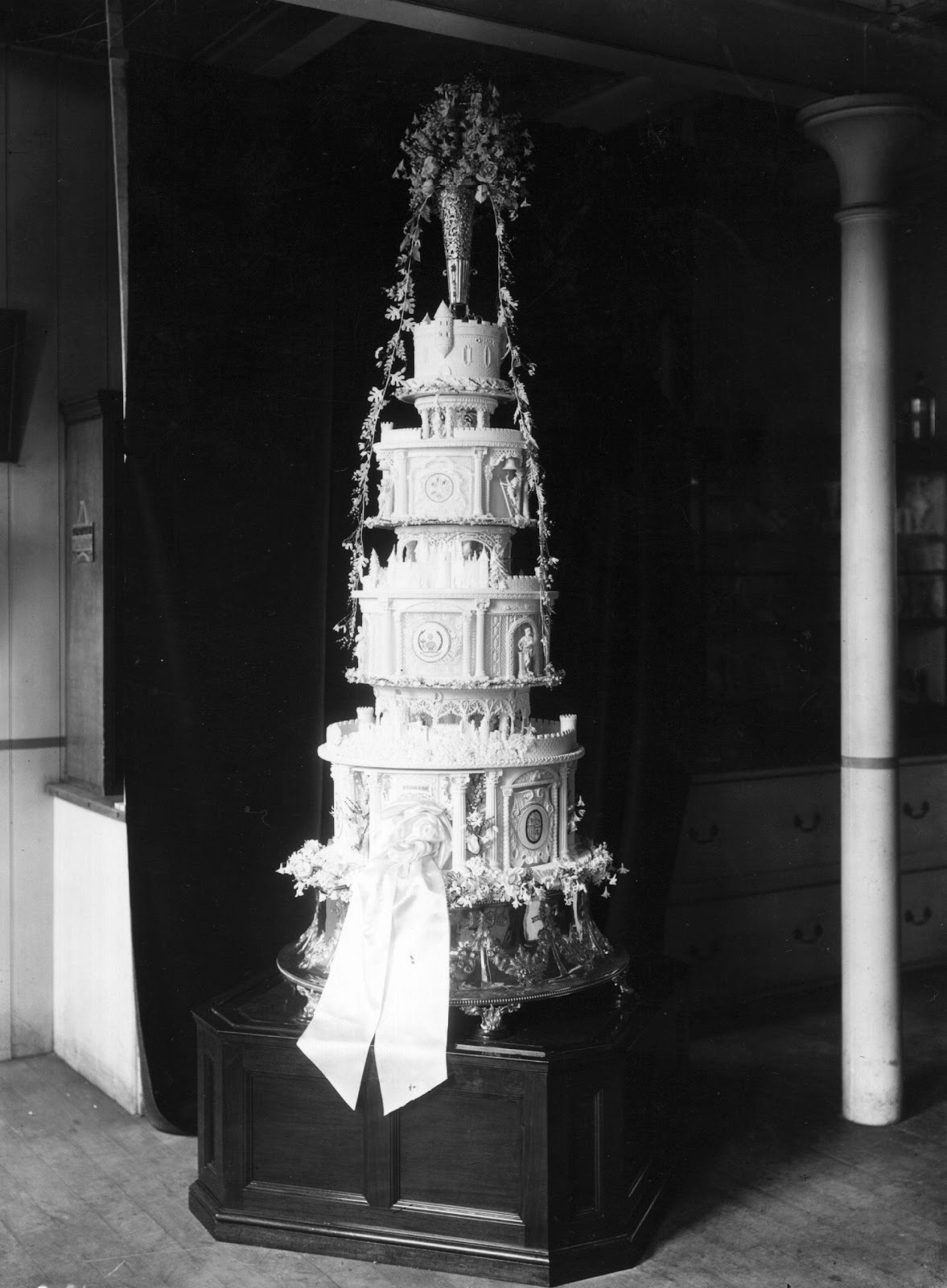
Cake one - King George VI and Queen Elizabeth...the 'queen mum...1923.

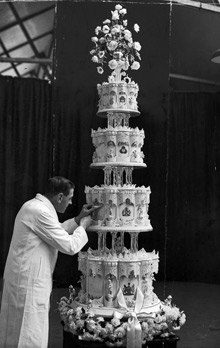
Cake two - Queen Elizabeth's and Prince Philip's in 1947
 

Thursday, February 14, 2013

Let's check out a few other royal wedding cakes....
Of most recent memory....Kate and Will's 
 
No figure at the top....but I created one below that could have been!


The Royal Wedding cake was designed and made by Fiona Cairns. There were 900 handmade flowers on the cake in 17 varieties that Kate selected based on the "Language of Flowers."  Some of the swags and detail work of the cake are reminiscent of the architectural details of Buckingham Palace.
 
The Language of Flowers

Rose (white) :: national symbol of England
Daffodil :: national symbol of Wales, new beginnings
Shamrock - national symbol of Ireland
Thistle :: national symbol of Scotland
Acorns, oak leaf :: strength, endurance
Myrtle :: love
Ivy :: wedded love, marriage
Lily of the valley :: sweetness, humility
Rose (bridal) :: happiness, love
Sweet William :: grant me one smile
Honeysuckle :: the bond of love
Apple blossom :: preference, good fortune
White heather :: protection, wishes will come true
Jasmine (white) :: amiability
Daisy - innocence, beauty, simplicity
Orange blossom :: marriage, eternal love, fruitfulness
Lavender :: ardent attachment, devotion, success, and luck.


Tuesday, February 12, 2013


Queen Victoria's Wedding cake - and her royal cake topper!  Victorians not only copied her fashion of a white wedding dress...but also a custom of figural wedding cake toppers! 

 The royal cake weighed nearly 300 pounds and was three yards in circumference. It was was about fourteen inches in depth or thickness. It was showcased upon an elegant “superstructure” and cost more than £100.

It was covered with pure white sugar and the top featured the figure of Britannia in the act of blessing the illustrious Bride and Bridegroom, who were dressed in the costume of ancient Greece. These figures were not quite a foot in height. At the feet of HRH Prince Albert was the effigy of a dog, said to denote fidelity; and at the feet of Queen Victoria were a pair of turtle doves, denoting the felicities of the marriage state

A cupid sat writing in a volume expanded on his knees the date of the day of the marriage, with various other cupids bearing emblems of the United Kingdom. On the top surface of the cake were numerous bouquets of Orange Blossoms and Myrtle entwined; similar sprigs were placed loose as presents to the guests at the nuptial breakfast. The elegant Royal Wedding Cake, a symbol of the celebrations of marriage, was placed on the breakfast table of the queen at Buckingham palace following the ceremonies in the chapel royal.

Sunday, February 10, 2013

Queen Victoria's impact on weddings....

Queen Victoria, as her British royal kin since, impacted all areas social trends.  Her wedding to Prince Albert in 1840 established two important wedding trends practiced today...the white wedding dress...and, important to me - the wedding cake topper!


Smart queen....the industrial revolution had nearly decimated the English handmade lace industry.  In order to stimulate and support the lace industry, Victoria chose for her wedding dress a large piece of handmade Honiton lace. The rest of the dress then became a vehicle to showcase the lace, and white was chosen as the most suitable colour to do this. In the case of Victoria’s dress, white symbolised practicality and patriotism, rather than purity.

Victoria’s wedding attire was not devoid of symbolism though: she wore a wreath of orange blossoms (symbolizing purity) and myrtle (symbolizing love and domestic happiness), and these became the most common flowers carried and worn in Victorian weddings.  A sprig of myrtle from Victoria’s bouquet was planted, and cuttings from the resulting bush have been carried by every royal bride in her family since then!

Next post...her wedding CAKE!


Friday, February 8, 2013

OK, I was a history major....so here's a brief history of wedding cakes and toppers...

We look to ancient Rome where the custom of breaking bread cakes over the bride’s head was thought to bring good fortune to the married couple.  It was also believed that the crumbs from these cakes were considered symbols of good luck and fertility for their wedding guests!


In Medieval England sweet bun type cakes were stacked as high as possible for the bride and groom to kiss over, if they successfully kissed over the stack they were guaranteed a prosperous life together.  

During the mid-17th century to the beginning of the 19th century, the “bride's pie” was served at most weddings. Guests were expected to have a piece out of politeness; it was considered very rude and bad luck not to eat the bride’s pie.  

Bride’s pie eventually developed into the bride’s cake.   The bride cake was traditionally a plum or fruit cake, the myth that eating the pie would bring good luck was still common. Fruit cakes were a sign of fertility and prosperity which helped them gain popularity because all married men wanted to have plenty of children.

The bride’s cake eventually transformed into the modern wedding cake that we know today.  In the 17th century, two cakes were made, one for the bride and one for the groom. The groom's cake eventually died out and the brides cake turned into the main cake for the event. When the two cakes were served together, the groom's cake was typically the darker colored, rich fruit cake and generally much smaller than the bride's cake. The bride’s cake was usually a simple pound cake with white icing because white was a sign of virginity and purity.   

In the early 19th century, when the bride’s cake’s were becoming more popular, sugar was coincidentally becoming easier to obtain. The more refined and whiter sugars were still very expensive therefore only the wealthy families could afford to have a very pure white frosting, this showed the wealth and the social status of the family. 

Next time...Queen Victoria and her impact on wedding traditions as we know them.... 

Wednesday, February 6, 2013

Classic German Hertwig wedding figures...

In 1865 Christoph Hertwig and 2 partners opened a porcelain factory in the Thurigian town of Katzhutte.  Their first products were porcelain "novelties" including shoulder head bisque doll heads.  

I love the term "novelties."  "Novelties" are small manufactured adornments, toy or collectible."  In the 19th and 20th century, Hertwig  manufactured a wide selection of impulse items...bisque dolls, figurines, animals, and knick-knacks.  Many of these were sold in Woolworths, J.C. Murphy and local 5&10 cent stores.  They also offered more expensive lines for fancy good stores.

Mixed in the Hertwig novelty line were cake topper figures.  Not everyone could afford to buy a fancy cake to celebrate a special occaision.  Figures commemorating a baptism or first communion could be purchased and stuck on a cake.  It is believed that Hertwig introduced wedding cake topper figures between 1914-1920. 

You can see below the quality of molding, painting and variety of their work below....


Monday, February 4, 2013

2013 Wedding ideas

Good news for nostalgic-vintage loving brides-to-be...with the approaching movie release of "The Great Gatsby" this spring summer....Great Gatsby inspired 1920's weddings are HOT in 2013!

Picture of my grandmother Sallie Haueisen...lace gowns, veils, and bridal crowns are part of the look 

This is good news for me.  I make custom wedding cake toppers.   My toppers feature wedding figures cast from molds made from originals from the 1920's and 1930's.  In my opinion, the German Hertwig company made some of the finest wedding figures ever made.  I'm lucky to have 6 original figures in my collection.  


My most popular figure used today is a Hertwig figure customized with elements carved off...
 
 2012 June Sweet Pea Topper
 
More talk tomorrow about antique Herwig figures and elements of a classic wedding cake topper...

Got an antique-vintage wedding picture to share....contact me!